
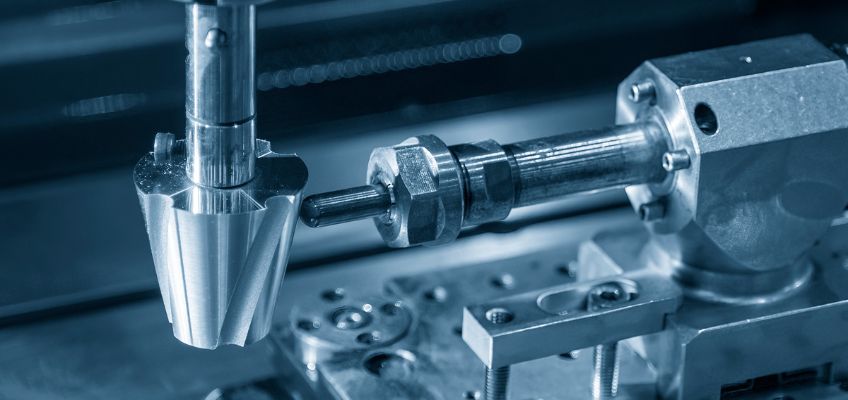
Electrical discharge machining, or EDM, shapes metal with controlled electrical sparks. It is especially useful for hard, electrically conductive materials that can be difficult to cut with ordinary tools. The sparks remove tiny bits of material without a cutting tool pressing hard against the part.
Sinker EDM and wire EDM use this same basic idea, but they shape parts in different ways. The right choice depends mostly on the shape you need to make.
How Sinker EDM Works
Sinker EDM uses a shaped electrode, often made from graphite or copper. The electrode is made to resemble the cavity or detail the finished part needs. It moves toward the workpiece while both sit in a fluid that helps control the sparks and carry away debris. The sparks gradually erode the metal, leaving a matching cavity in the workpiece.
Think of it as pressing a custom-shaped form into metal, except the electrode does not physically push or cut its way in. A small gap remains between the electrode and the part while the sparks do the work.
Because the electrode can have a three-dimensional shape, sinker EDM is a good fit for cavities, pockets, ribs, and other details that are hard to reach with a rotating cutter. It is commonly used for mold and die work, such as forming the cavity for a plastic part, and for intricate features in hardened steel. It can also make blind cavities: features that start at the surface but do not pass all the way through the part.
A sinker EDM job usually needs an electrode designed and made for the feature. That preparation adds time and cost, especially if the part has many different cavities. In return, the process can reproduce complex shapes in hard metal without a conventional cutting edge.
How Wire EDM Works
Wire EDM uses a thin, continuously fed metal wire as its electrode. The machine guides the wire through the workpiece, and electrical sparks erode a narrow path around it. The wire does not touch the part during cutting. In a common setup, the cut takes place in deionized water, which helps manage the spark gap and flush away debris.
The wire works much like a very fine, powered saw. It can cut detailed outlines and narrow slots through a conductive workpiece. Wire EDM is suited to profiles that pass all the way through the material, such as a punch, a die opening, a gear shape, or a precision plate. The wire machines can angle the wire, which makes tapered cuts and certain three-dimensional shapes possible not previously achievable through conventional machining.
Wire EDM does not need a custom-shaped electrode for every contour. The machine follows a programmed path, and fresh wire keeps feeding into the cut. This makes it useful for accurate profiles, small internal corners, and repeatable parts.
The Key Differences
The easiest distinction is the tool and the shape it makes. Sinker EDM uses a shaped electrode to create a cavity or detailed feature. Wire EDM uses a moving wire to cut a path through a part. If you need a blind feature inside the material, sinker EDM is often the more suitable option. If you need to separate a shape from a plate or cut a through-profile, wire EDM is usually the natural choice.
The setup is different, too. Sinker work requires an electrode that matches the desired feature. Wire work requires a suitable entry path and a programmed cut. Both processes can be highly precise, but the achievable accuracy, finish, and production time depend on the machine, material, geometry, and chosen settings. Neither process is automatically best for every job.
Both methods work only on electrically conductive materials. They can machine very hard metals because sparks, rather than a sharp tool edge, remove the material. EDM also applies little direct cutting force, which helps when a thin or delicate feature might bend under pressure. It is not always the fastest or least expensive approach, so a machinist may compare it with milling, grinding, or another process before choosing.
Choosing The Right Process
Start with the finished shape. A deep, intricate cavity or blind feature points toward sinker EDM. A precise outline, slot, or profile that passes through the workpiece points toward wire EDM. Then consider the material, required finish and tolerance, part thickness, quantity, and whether the job needs a custom electrode. Sharing a drawing with an EDM shop can help determine the practical route before production begins.
About CAM Tech
Taking time to evaluate experience, equipment, quality standards, customer service, and production capabilities will help you choose a provider that meets your long-term manufacturing needs.
If you’re looking for dependable wire EDM machining services, CAM Tech is a company worth considering. With advanced machining capabilities, a commitment to precision, and a strong focus on customer satisfaction, Whether you need prototypes or are ready for a production run, contact us at CAM Tech.